
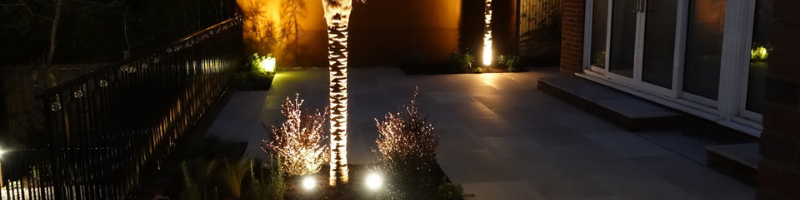
Dark Skies. A topic that is becoming a regular discussion within the outdoor lighting industry.
So, what is the aim, the issue, the solution and how do we (the collective Landscape Industry) do our bit? In reality, any form of artificial light pollution is going to have an impact on wildlife, affecting their natural feeding cycles, reproduction or even knowing when the threat from predators is heightened; that said, I'd like to keep my job and lighting is no small part of it, not to mention a well-lit garden is simply beautiful!
So what's the answer? How do we continue to light gardens so that your clients can appreciate their investment all year round and not just in the summer, whilst minimising the impact on nature? As with most things in life, it's all about balance!
The IDA (International Dark-Sky Association) is a brilliant source of information with some great tips on how we can minimise this impact. I'm going to take some of their tips and translate them into a garden situation with methods, products and systems to help on your next lighting project.
Only turn lights on when required!
Start with the easy solution! This really is as simple as it sounds and is no different to switching off a light when leaving a room in the house. There are a few options if you prefer to have an automated system for switching the lights:
- Sensors - A great way of making a practical part of a lighting system automatically switch when the area is in use. This could be a simple PIR sensor around a seating area or a gateway sensor the switches driveway lights on when the gate is opened or a car enters the driveway. All are easily achievable and ensure the lights will switch off when the area isn’t in use.
- Timers - At Landscapeplus we believe that good lighting design will blend practical lighting with aesthetic lighting. When thinking of aesthetic lighting we always suggest picking out some key features within the garden that your client will view from the house. Leaving this view down to a client physically switching on the lights (and remembering to switch them off as they go to bed) will usually result in one of two things.... The lights rarely go on OR often remain on all night! A timer or astronomical clock is a brilliant way to ensure the best of both worlds.
Only light the area that needs it!
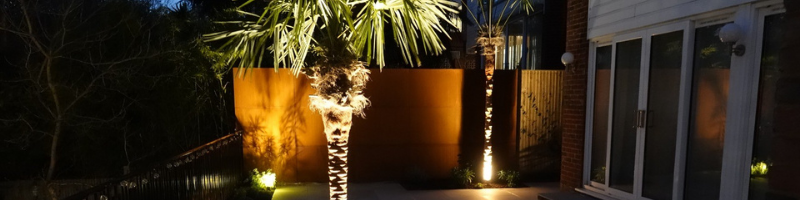
(Image Credit of SJ Electrical & Ross Allan)
Again, split your thinking into practical and aesthetic.... Practically, you wouldn't light the living room whilst you’re in the kitchen so why would you treat a garden any differently? That said, you want to make sure the client can appreciate the garden all year round. The answer - zone your lighting!
Be no brighter than necessary!
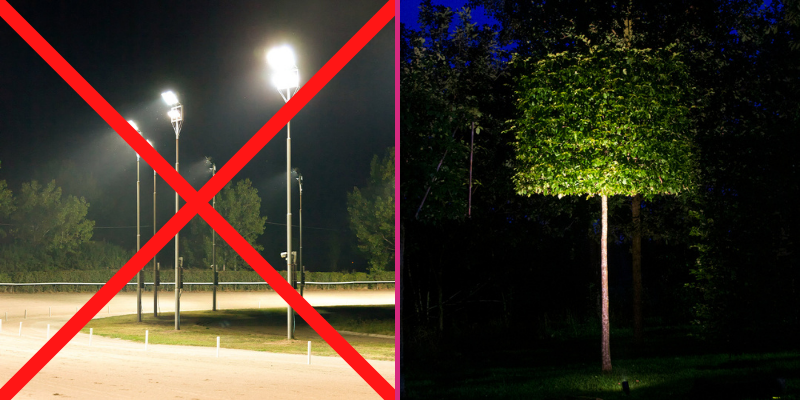
In years gone by we would find ourselves with a simple decision when choosing lights, 20w, 35, or 50w being the obvious halogen choices... but then came LEDs! Far too often we're led to believe that LED output is measured by the wattage when wattage is actually just the amount of power consumed by the fitting. The true figure you're looking for to measure light output is the lumen output. Wattage and lumens will often relate within a particular range however all LED manufactures are competing to create more efficient units and for this reason you'll often find a wattage drop whilst lumens either rise of remain the same! Our team will be more than happy to help with this ever changing world of LED lighting and due to our trade only nature we really do want the correct fitting for the application (not the most expensive!).
Minimize blue light emissions!
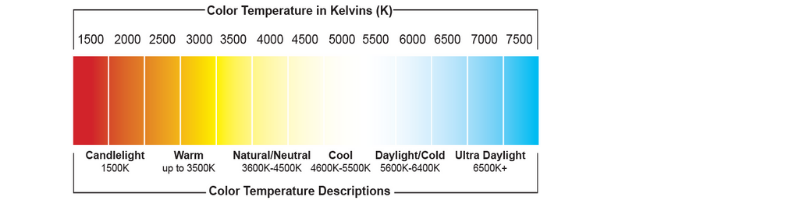
Thankfully, as an industry, this is an easy win as 99% of our lighting sales are warm white and therefore either 2700k or 3000k (K - Kelvin, the measure of light temperature).
Be fully shielded (pointing downward)
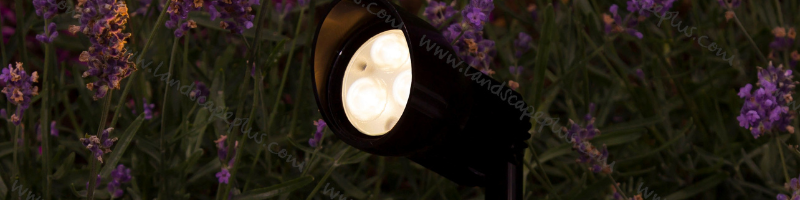
Shielding a light to minimize pollution is all down to the design of the fitting and it's usage. Below are a few suggestions and personal favourites of mine. If you're in doubt please get in touch and we'll be more than happy to help.
- Path Lighting is the most obvious, this could come in the form of a pole spot or border light that can be angled downwards. A facet light that will cast light across a surface, or my go-to, the LuxR way finder, a slim and sleek fitting that uses an asymmetric and shielded LED to push light downwards.
- Spike lighting is by far the most common form of lighting within a garden. The first advice I would have is make sure the fittings are well positioned so that they are focused on the target rather than lighting the space around it. The second is to use a glare guard. These are usually in the form of an additional part that fits to the front of the fitting or with some options, such as the Ortus fittings, the LED is set much further back in the unit to create a built-in glare guard (often referred to as a "snoot")
Hopefully with all of the above in mind we can make a collective effort to look after the Dark Skies whilst continuing to light beautiful gardens (and keep me in a job!).
As always, if you're at all in doubt please get in touch with our Design Support team to discuss the available options for compatibility with the Dark Skies initiative.
Categories
Copyright 2025 Landscapeplus
Ecommerce website by Coretonomy